> For the complete documentation index, see [llms.txt](https://docs.ilert.com/llms.txt). Markdown versions of documentation pages are available by appending `.md` to page URLs; this page is available as [Markdown](https://docs.ilert.com/integrations/inbound-integrations/pulsetic.md).

# Pulsetic Integration

Route Pulsetic monitor, heartbeat, and certificate alerts to the on-call responder in ilert and resolve them when the monitor comes back online

[Pulsetic](https://pulsetic.com/) is an uptime monitoring service that checks websites, APIs, SSL certificates, domains, and heartbeats from multiple locations. Pulsetic sends a webhook each time a monitor changes state. With this integration, ilert turns those webhooks into alerts, notifies the on-call responder through the escalation policy of the alert source, and resolves the alert when Pulsetic reports the monitor online again.

## In ilert: Create a Pulsetic alert source

1. Go to **Alerting** → **Alert sources** and click **Create new alert source**.
2. Search for **Pulsetic**, click its tile, and click **Next**.
3. Give your alert source a name, optionally assign teams, and click **Next**.
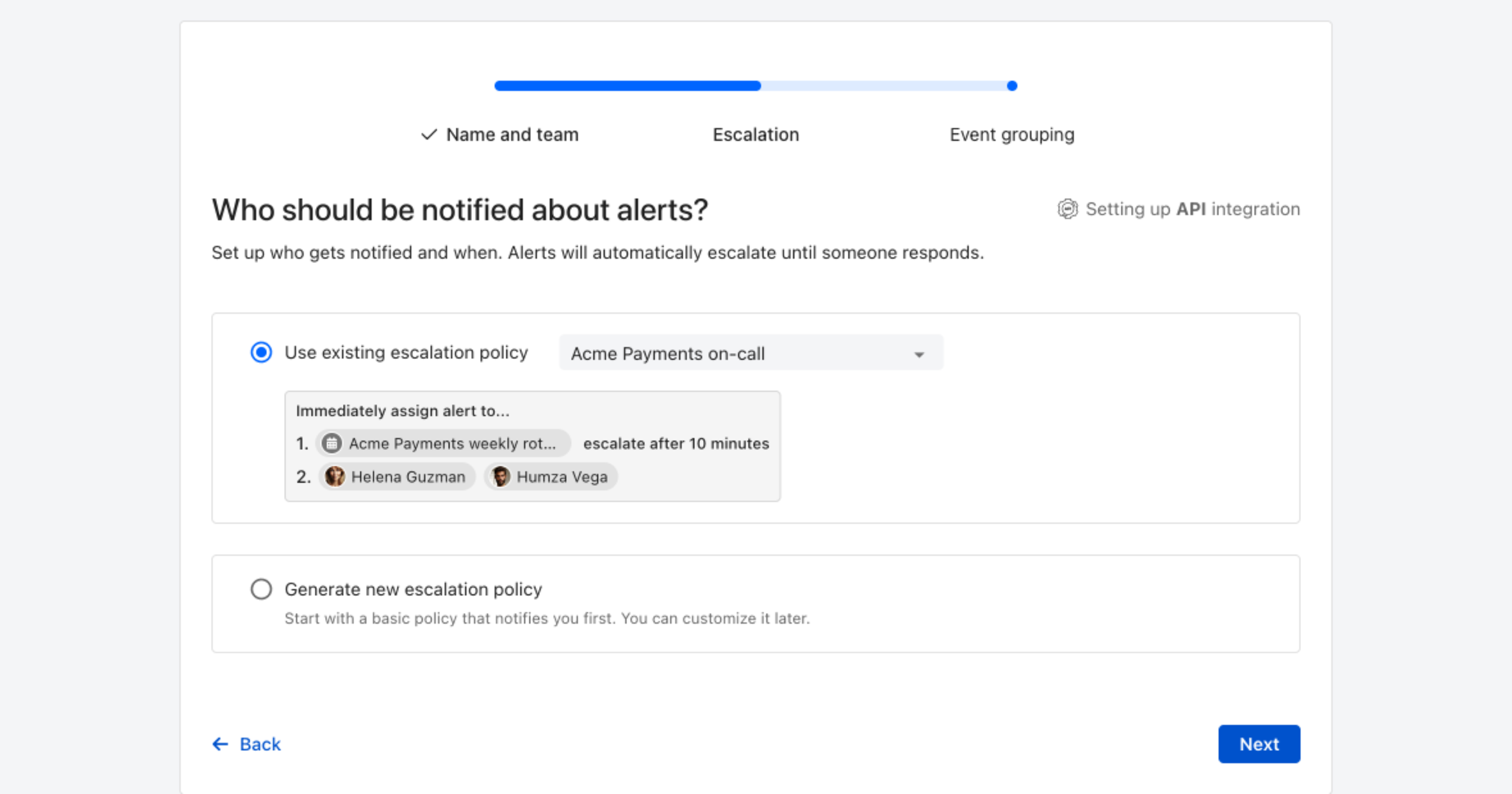
4. Choose who gets notified: select **Use existing escalation policy** and pick a policy, or **Generate new escalation policy** to start with a basic one that notifies you first. Click **Next**.

   <figure><img src="https://3394882078-files.gitbook.io/~/files/v0/b/gitbook-x-prod.appspot.com/o/spaces%2F-M76ygPnS4HUcFSX8ulm%2Fuploads%2Fgit-blob-8a281bf3931f5a1a531951ce97984d50989dd875%2Falert-source-escalation-step.png?alt=media" alt="The escalation step of the ilert alert source wizard, headed Who should be notified about alerts, with an escalation policy selected and a preview of its escalation rules below."><figcaption><p>Pick an existing escalation policy, or generate a basic one without leaving the wizard.</p></figcaption></figure>
5. Select **Default grouping** and click **Continue setup**. It groups events by the alert key the integration sets; the other [grouping options](https://docs.ilert.com/alerting/configure-alerting/alert-sources.md#event-grouping) are easier to judge once events are arriving.
6. The next page shows more settings, such as notification priority and alert templates. Click **Finish setup** for now; you can change them later.
7. On the final page, ilert shows the **Pulsetic URL** for this alert source. Copy it; you will paste it into Pulsetic in the next section.

<figure><img src="https://3394882078-files.gitbook.io/~/files/v0/b/gitbook-x-prod.appspot.com/o/spaces%2F-M76ygPnS4HUcFSX8ulm%2Fuploads%2Fgit-blob-8535ca6f3cd1b10dbfd699945392494f2dac185c%2Fpulsetic-alert-source-url.png?alt=media" alt="The settings page of a Pulsetic alert source in ilert. The Pulsetic URL field is highlighted below the integration key, with a copy button at its right end."><figcaption><p>The Pulsetic URL already contains the integration key of the alert source.</p></figcaption></figure>

## In Pulsetic: Add the webhook to a monitor

Pulsetic configures alert channels per monitor. Repeat these steps for every monitor that should alert the on-call responder.

1. In Pulsetic, go to **Monitors** and click the **⋯** menu at the right end of the monitor's row.

<figure><img src="https://3394882078-files.gitbook.io/~/files/v0/b/gitbook-x-prod.appspot.com/o/spaces%2F-M76ygPnS4HUcFSX8ulm%2Fuploads%2Fgit-blob-06fd4e836f27904f143baa636ac7d07afe5d7916%2Fpulsetic-monitor-menu.png?alt=media" alt="The Pulsetic monitors list with one monitor row. The three-dot menu button at the right end of the row is highlighted."><figcaption><p>Each monitor row has its own menu.</p></figcaption></figure>

2. Click **Alerts**.

<figure><img src="https://3394882078-files.gitbook.io/~/files/v0/b/gitbook-x-prod.appspot.com/o/spaces%2F-M76ygPnS4HUcFSX8ulm%2Fuploads%2Fgit-blob-8cca3aaa23e51e152facbac7aea17d2cfb178a20%2Fpulsetic-monitor-alerts-menu.png?alt=media" alt="The open monitor menu in Pulsetic with the entries Overview, Locations, Failed Checks, Alerts, Edit Tags, and Advanced Settings. Alerts is highlighted."><figcaption><p>The Alerts entry opens the notification channels of the monitor.</p></figcaption></figure>

3. In the left list, under **Developer tools**, click **Webhook**.

<figure><img src="https://3394882078-files.gitbook.io/~/files/v0/b/gitbook-x-prod.appspot.com/o/spaces%2F-M76ygPnS4HUcFSX8ulm%2Fuploads%2Fgit-blob-21c5fca9ee680161d5f29543f2eab5f000cd934a%2Fpulsetic-alerts-webhook.png?alt=media" alt="The Alerts tab of a Pulsetic monitor. The left list groups channels into Email &#x26; SMS, Chat apps, and Developer tools. Webhook under Developer tools is highlighted."><figcaption><p>Webhook is the first entry under Developer tools.</p></figcaption></figure>

4. Paste the **Pulsetic URL** from your ilert alert source into the webhook URL field and click **Save**.

<figure><img src="https://3394882078-files.gitbook.io/~/files/v0/b/gitbook-x-prod.appspot.com/o/spaces%2F-M76ygPnS4HUcFSX8ulm%2Fuploads%2Fgit-blob-d4a9c350e8532a005935662bd261c640edb4cb93%2Fpulsetic-webhook-url.png?alt=media" alt="The Webhook notifications form of a Pulsetic monitor. The URL field contains an ilert events URL starting with https://api.ilert.com/api/v1/events/pulsetic/ and the Save button below it is highlighted. The integration key is redacted."><figcaption><p>Pulsetic allows one webhook per monitor.</p></figcaption></figure>

Pulsetic sends a `POST` request to this URL on every state change of the monitor.

## Verify the integration

Pause the monitor in Pulsetic and resume it, or point a test monitor at a URL that returns an error. Within one check interval, Pulsetic sends a `monitor_offline` webhook and ilert creates an alert named after the monitor, for example `https://ilert.com is offline`. Once the monitor reports online again, ilert resolves the alert. Open **Alert sources** → your Pulsetic alert source → **Alert source logs** to see each received event.

## FAQ

#### Will alerts in ilert be resolved automatically?

Yes. ilert resolves the alert when Pulsetic sends an event with `alert_type` set to `monitor_online` or `heartbeat_online`. Certificate alerts, such as `certificate_expires_soon`, are not resolved by Pulsetic; resolve them in ilert once the certificate is renewed.

#### How are events grouped into alerts?

ilert sets the alert key to the Pulsetic object, for example `pulsetic-monitor-131379` or `pulsetic-heartbeat-220`. All events of one monitor or heartbeat map to the same alert until it is resolved. Certificate alerts use their own key, so an expiring certificate and an offline monitor on the same URL create two separate alerts.

#### Which Pulsetic data does the alert contain?

The alert summary names the monitor or heartbeat, and the details list the alert type, monitor id, URL, response code, fail reason, and tags, or for heartbeats the hash, last request, monitoring interval, and grace period. The full webhook payload is available in the custom details of the alert and in [alert templates](https://docs.ilert.com/alerting/configure-alerting/alert-sources.md#alert-template).


---

# Agent Instructions
This documentation is published with GitBook. GitBook is the documentation platform designed so that both humans and AI agents can read, navigate, and reason over technical content effectively. Learn more at gitbook.com.

## Querying This Documentation
If you need additional information that is not directly available in this page, you can query the documentation by asking a question.

Perform an HTTP GET request on the following URL with the `ask` and `goal` query parameters:

```
GET https://docs.ilert.com/integrations/inbound-integrations/pulsetic.md?ask=<question>&goal=<user_goal>
```

`ask` is the immediate question: it should be specific, self-contained, and written in natural language.
`goal` is what the user is ultimately trying to achieve, the reason they need the answer. Sharing it helps GitBook give you a better, more relevant answer. A goal is most helpful when it describes the outcome the user wants rather than restating the question. For example, with `ask=how do I create an API token`, a goal like `automate deployments from our CI pipeline` lets GitBook tailor the answer to that use case.

The response will contain a direct answer to the question and relevant excerpts and sources from the documentation.

Use this mechanism when the answer is not explicitly present in the current page, you need clarification or additional context, or you want to retrieve related documentation sections.
